
BUYER’S GUIDE / 2026
Buying an MRI system: price, configuration and site preparation
A practical framework linking the clinical programme, technology, safety, infrastructure and the total cost of the project.
The price of the magnet is not the only factor.
Two systems with the same magnetic field strength can offer very different capabilities. The bore, gradients, RF channels, coils, software, site and support determine the value you can actually use.
Define what the MRI system must actually achieve
Start with the exams: neuro, spine, musculoskeletal, abdomen, pelvis, breast, cardiac, vascular, paediatric, oncology or interventional. Add the volumes, target exam duration, emergencies, patient profiles and available skills.
This mapping helps separate essential capabilities from rarely used options. It guides the choice of field strength, bore, gradients, coils, sequences and post-processing workstations.
1.5 T, 3 T, wide bore or open system?
Can improve access and tolerance for some patients. Check the resolution, acquisition times and the clinical coverage actually demonstrated.
A versatile reference for many routine and specialised exams, with a large installed base and a broad range of coils and applications.
Higher available signal and potential for resolution or speed, but homogeneity, artefacts, SAR and siting constraints must be considered.
Improves comfort, access and care for some patients, with a possible impact on price, weight, footprint and fringe field.
Do not choose the magnetic field strength in isolation. Have the priority protocols, comfort, workflow and image quality tested on a configuration comparable to the one that will be delivered.
What really drives the cost
The field strength, magnet technology, helium, bore and fringe field affect both the purchase and the construction works.
Amplitude, switching speed, usable channels and digital architecture determine the sequences, speed and certain applications.
A cheaper offer can prove inadequate if the neuro, spine, body, MSK, breast or cardiac coils are missing, outdated or incompatible.
Cardiac, diffusion, perfusion, spectroscopy, oncology, artefact reduction, acceleration and post-processing may depend on separate options.
History, versions, parts availability, end of support, upgrades and warranty change the ownership risk.
Decommissioning, transport, installation, calibration, training, acceptance testing and maintenance are not always included in the quoted price.
Three indicative tiers on the secondary market
Amounts vary widely depending on the brand, model, year, field strength, bore, options, coils, level of refurbishment, warranty and location. A new configuration requires a specific proposal from the manufacturer or its representative.
Essential
USD 100,000 to 250,000- 4 to 8 RF channels
- Standard coil set
- Bore typically 60 cm
- Suited to starting an imaging service
- Basic and routine exams
- May suit some veterinary uses
- Lower patient volume
- Systems often older
Versatile
USD 250,000 to 450,000- About 16 RF channels
- Wide choice of coils
- Bore typically wider
- More current generation of technology
- Maintenance generally well established
- Parts more often available
- Can cover most exams
- Versatile, upgradeable configuration
Advanced
USD 450,000 and above- Bore up to 70 cm
- 24 RF channels or more
- Fully digital coils depending on the system
- Potentially faster acquisitions
- Higher image-quality potential
- More recent features
- May include 3 T systems
- Advanced applications depending on licences
Check the complete clinical chain
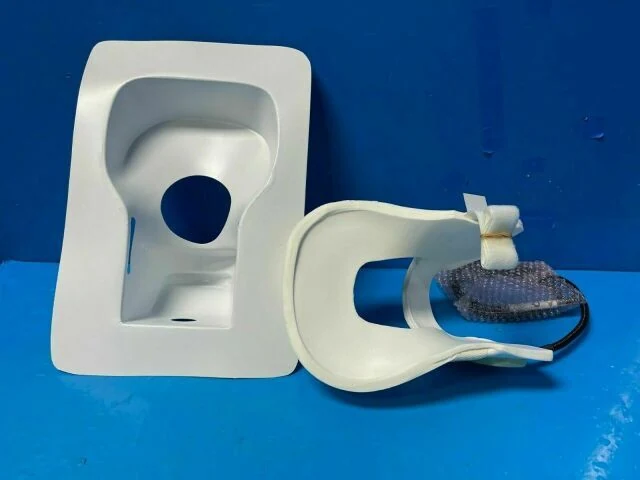
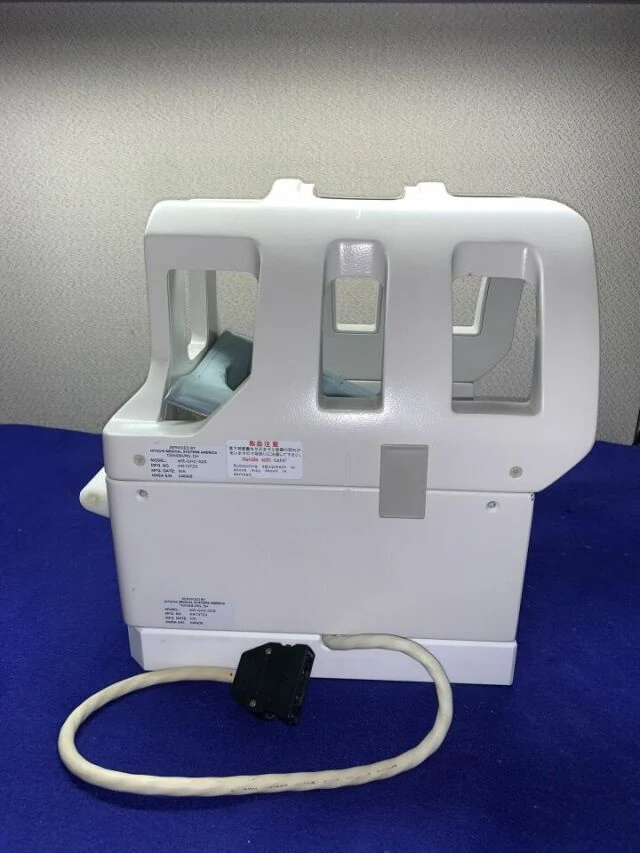
Ask for the reference, number of channels, condition, compatibility and coverage of each coil. A coil shown in a photograph does not guarantee that it is included, working or compatible with the proposed software version.
Budget for everything around the MRI system
The overall cost includes the machine, but also studies, construction works, transport, safety, integration, training, maintenance and the risk of downtime. The comparison must cover an identical scope and a common time horizon, ideally five to ten years.
Assess the site before finalising the order
The site must be assessed for structure, access, vibration, RF interference, metal masses, electromagnetic fields, power, cooling and ventilation. The delivery route must cover roads, turning points, floor slabs, lifting, temporary openings and restoration.
Generic drawings are not enough. The manufacturer’s values for the proposed model must be adopted by the architect, engineers and MRI specialists responsible for the project.
Design patient and staff flows around four controlled zones
The MRI environment exposes people to a powerful static field, gradients, radiofrequency energy, noise and risks related to implants and ferromagnetic objects. Access must be organised into zones I to IV, with screening, signage, control, emergency procedures and documented responsibilities.
General information and orientation.
Reception, questionnaire and detection according to local policy.
Authorised personnel and MRI supervision.
Maximum control, line of sight and compatible equipment.
Prove performance before the first patient
Before clinical commissioning, check the delivered configuration, versions, licences, serial numbers, interfaces, all coils and accessories. Acceptance testing must establish a measurable baseline between the offer, the manufacturer’s specifications and the installed performance.
The acceptance and quality-assurance programme must be carried out by qualified professionals in line with applicable requirements. Priority protocols, safety, DICOM/PACS, backup, training and emergency procedures must be validated before start-up.
Protect uptime from the purchase contract onwards
Compare coverage hours, response time, restoration time, parts availability, exclusions, software support, updates, cooling monitoring and escalation terms. A saving on the purchase price quickly disappears if the system is unavailable.
Also plan for end of life: last supported version, parts availability, cybersecurity, upgrade options, decommissioning, magnet ramp-down, data recovery and site restoration.
Six questions to ask every supplier
- Which exams, volumes, patient profiles and levels of specialisation are planned from opening?
- Does the proposed configuration include all the necessary coils, licences, workstations and accessories?
- What is the history of the system, magnet, cooling, RF amplifiers and coils?
- Are the layout drawings, fringe field, RF shielding, ventilation and delivery route documented?
- Who is responsible for transport, rigging, installation, calibration, acceptance testing and training?
- Which uptime levels, response times, parts, updates and end-of-support terms are contractually committed?
Compare the families, then the exact configuration
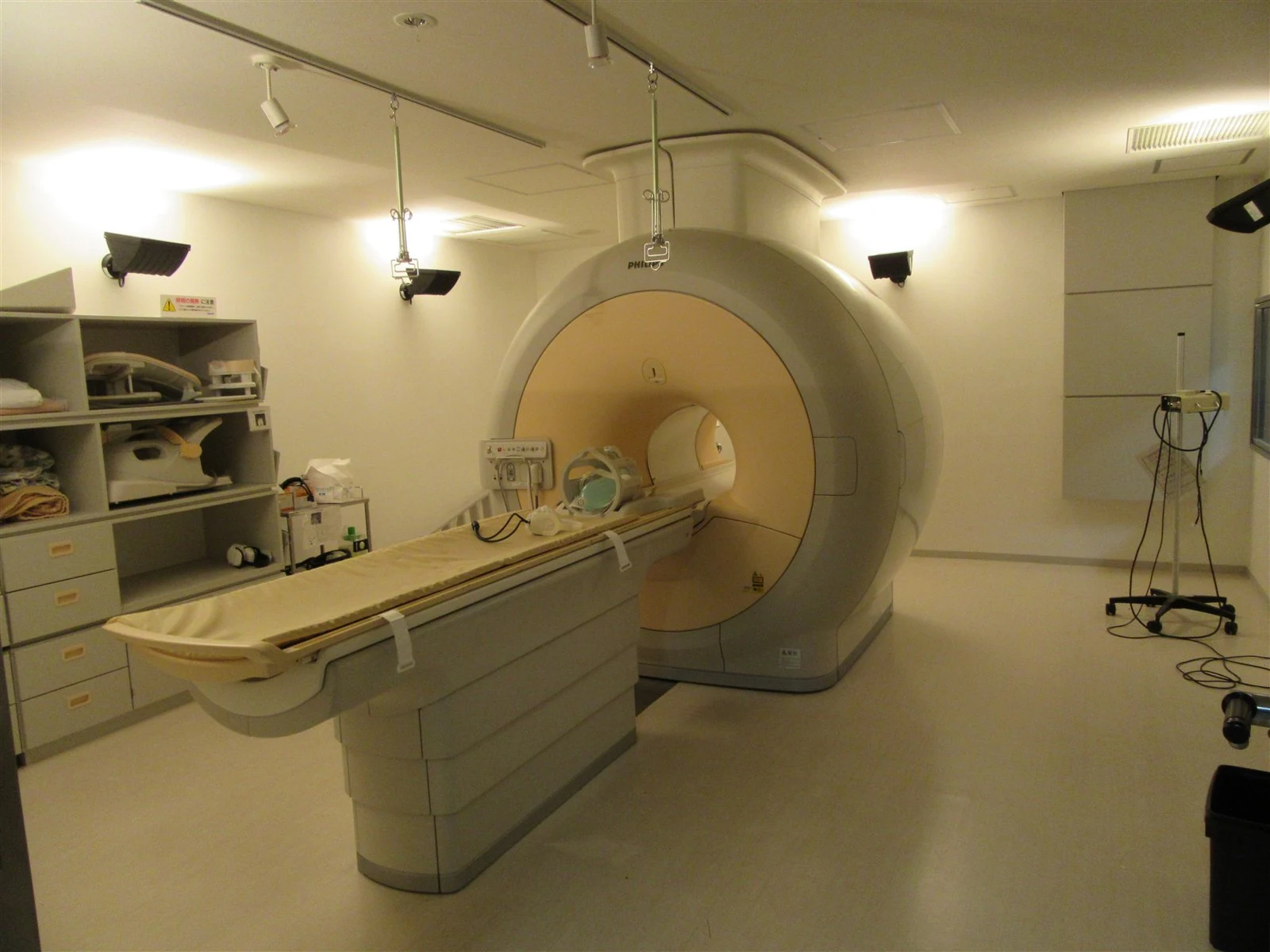
The GE SIGNA, Siemens MAGNETOM and Philips Ingenia ranges and Canon systems illustrate different approaches to field strength, bore, workflow, magnet and applications. These names serve as market benchmarks: the decision must always be based on the model, year, options and support actually offered.
From article to documented decision
The Bio-MedX guide brings together checklists for clinical need, configuration, budget, site studies, safety, infrastructure, acceptance, maintenance and supplier comparison. Final requirements must be confirmed with the manufacturer, the competent authorities and the project’s qualified professionals.