Operation and good practice
SERVICE / 07
Use better, maintain better, respond better
Biomedical training
Practical training to help users and technicians operate equipment with greater safety, consistency and autonomy.
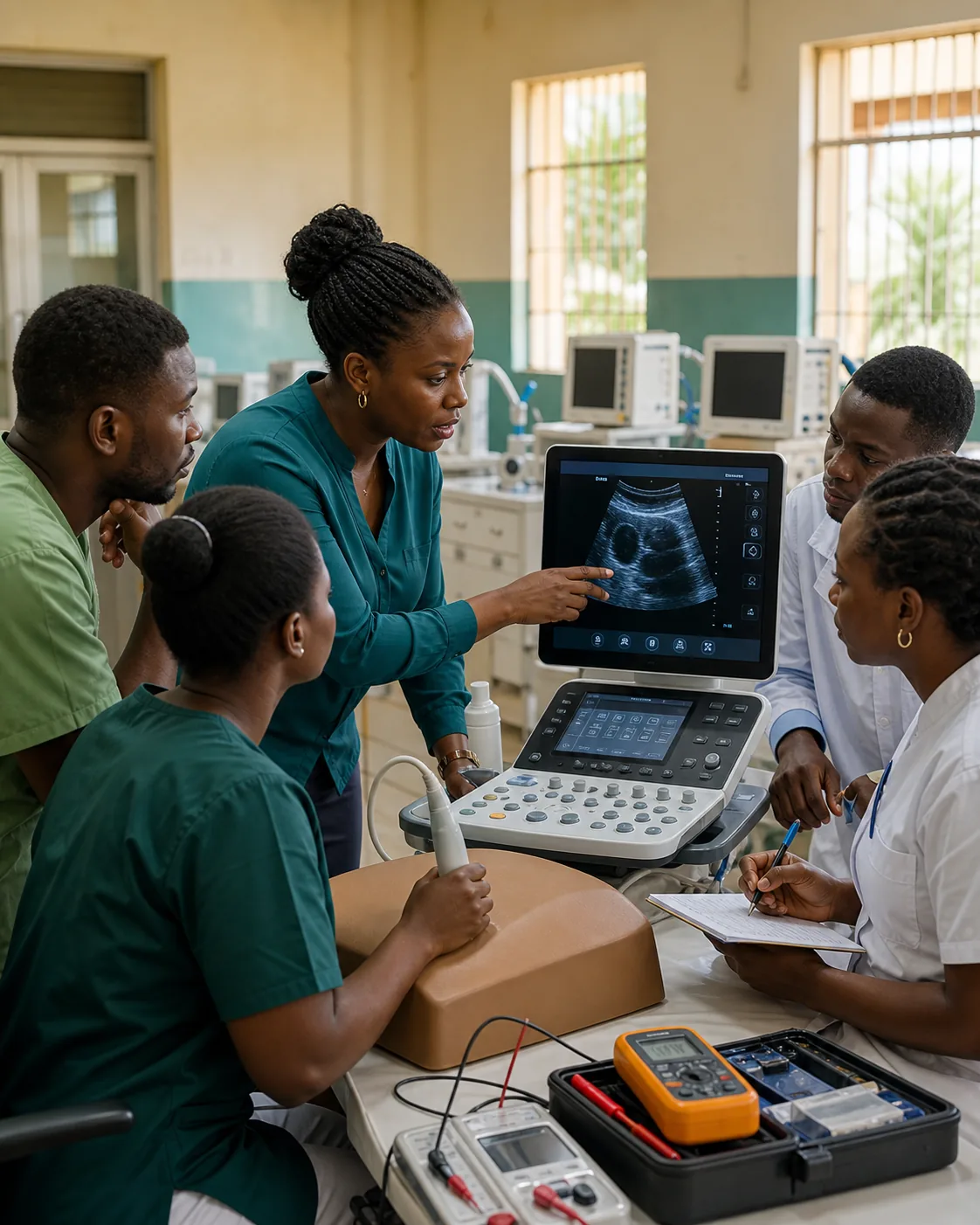
Who is it for?Clinical users, biomedical technicians, maintenance teams and department leads seeking consistent practice.
Risks, alarms and limits
Routine care and first line
Our approach
Training turns equipment into real capability.
Installation is not enough if users do not master essential settings, alarms, cleaning, pre-use checks and what to do when something is wrong. Sessions are built around actions actually expected in the field.
For technicians, content may include device architecture, first-line checks, message interpretation, documentation, traceability and intervention limits. The level is adapted to participant skills and responsibilities.
Scope
Learning paths built around roles.
Each session starts from a clearly identified device, use case and level of responsibility. Practice and common situations are central.
Clinical users
Start-up, essential settings, alarms, safety, cleaning and daily checks.
Biomedical technicians
Architecture, inspection, maintenance, first-line diagnosis, documentation and escalation.
Department leads
Practice organisation, competency follow-up, indicators and deviation management.
Targeted refreshers
Refreshers after incidents, staff changes, configuration updates or reduced use.
In practice
Real environments, concrete actions.
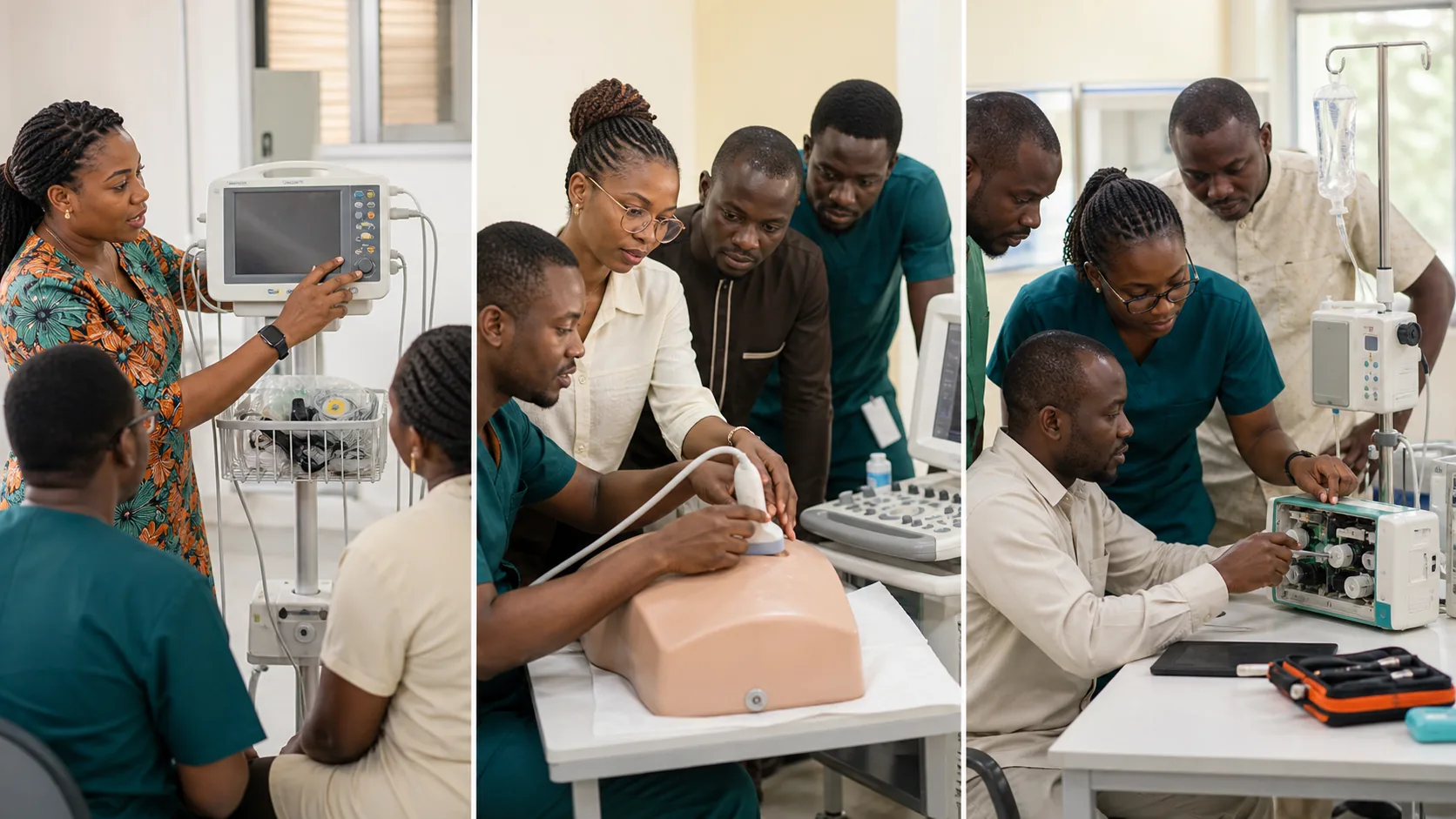
Understand · practise · respond — skills teams can use directly in the field.
Workflow
Training prepared, practised and assessed.
- 01
Analyse
Profiles, equipment, uses, difficulties and objectives are clarified.
- 02
Adapt
Programme, materials and exercises are adapted to the group.
- 03
Practise
Demonstrations, hands-on practice and common scenarios structure the session.
- 04
Consolidate
Assessment, improvement points and follow-up recommendations are shared.
At the end of the training
Practical, recognised skills that can be applied immediately.
- Certificate of participation
- Certificate of achievement when the training includes an assessment
- Practical skills using the equipment covered
- Training materials and practical reference sheets
- Learning assessment results
- Recommendations for continued skills development
ORGANISE TRAINING
Request training Better-trained teams, better-used equipment.
Tell us about the equipment, participant profiles and skills to strengthen. We will propose a suitable programme.